

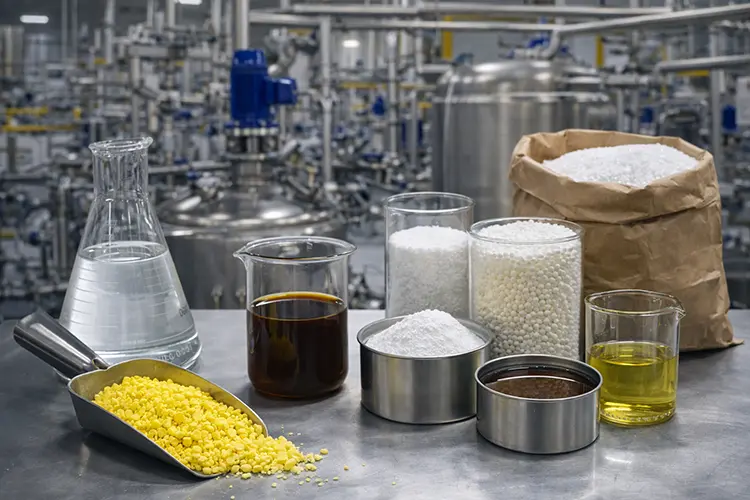
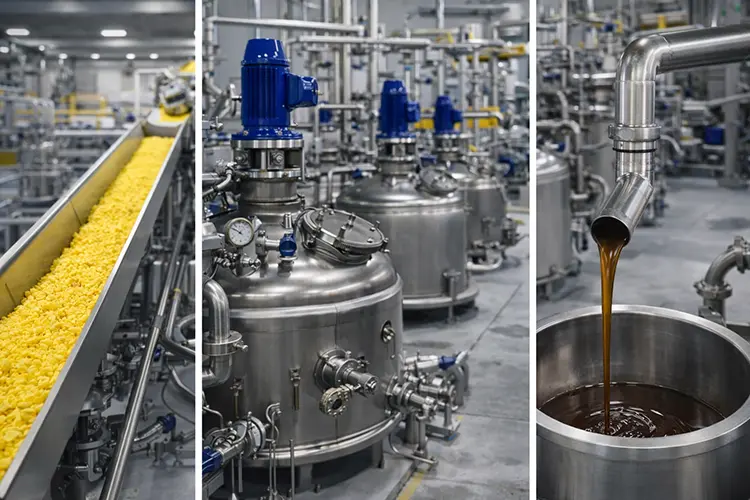
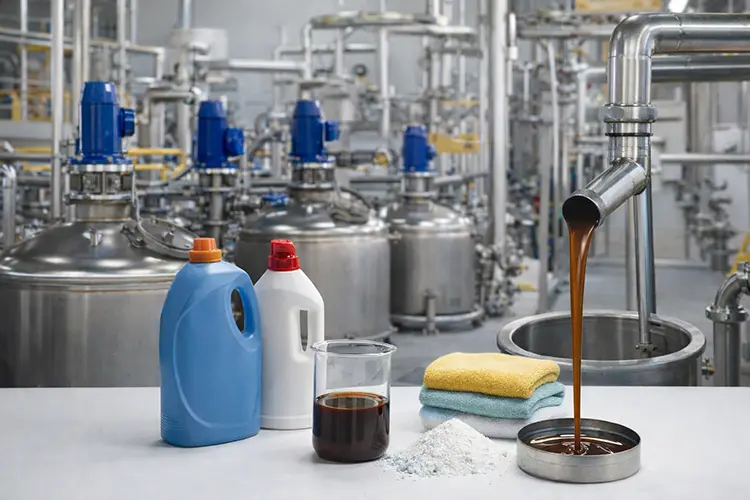
The quality of raw materials plays a fundamental role in the success of detergent manufacturing, as it directly affects the efficiency of the final product and the stability of its properties and performance during use. Detergent factories rely heavily on the quality of raw materials used in production processes, primarily sulfonic acid (LABSA).
The Relationship Between Raw Materials and Product Quality
The more raw materials comply with standard specifications, the more positively this is reflected in the quality of the detergent in terms of cleaning power, foam formation, and formula stability. However, using low-quality materials may lead to poor performance and product instability.
The Role of Sulfur and Alkyl Benzene
Sulfur is the primary material for producing (SO₃) gas, while Linear Alkyl Benzene (LAB) is used as a main component in the sulfonation process. The quality of the resulting sulfonic acid depends directly on the purity of these materials and the precision of their processing within production lines.
Proper Processing of Raw Materials
The importance of quality is not limited to material selection only, but extends to the method of storage and preparation before entering the production stage, ensuring the preservation of their chemical properties and preventing any contamination or loss of efficiency.
Quality Impact on the Market
Relying on high-quality raw materials helps detergent factories to:
Produce detergents with consistent performance
Reduce waste and defect rates
Meet local and international market requirements
Enhance customer confidence in the final product